





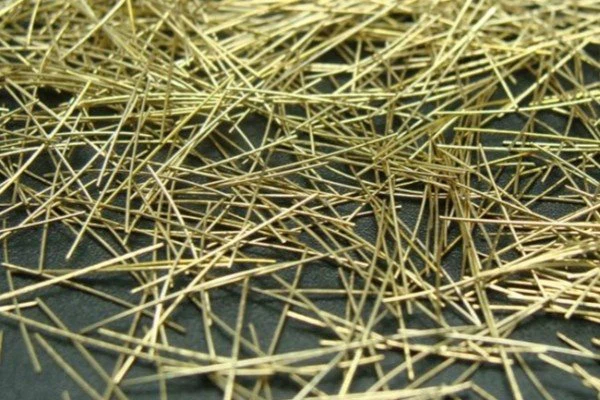
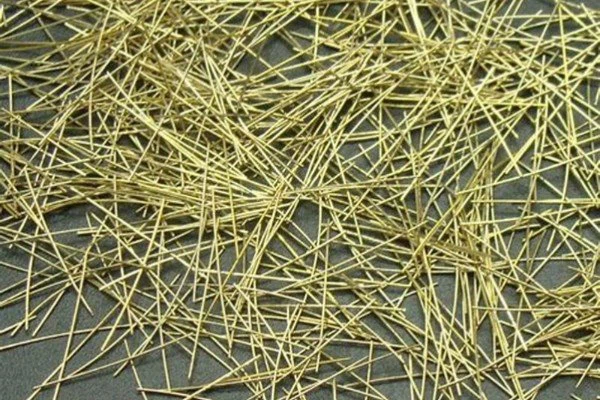


Steel fibers are made from high-strength steel and come in various shapes, lengths, and sizes. They are added to the concrete mix to improve its strength, durability, and toughness.
Steel fiber for concrete is a modern construction material that has revolutionized the way concrete structures are built. It is a type of reinforced concrete that uses steel fibers rather than rebar or mesh to reinforce the concrete.
Many types of steel fibers are used for concrete reinforcement. Round fibers are the most common type and their diameter ranges from 0.25 to 1.05 mm. Deformed fibers in the form of a bundle are also used. The main advantage of deformed fibers is their ability to distribute uniformly within the matrix.
We are manufacturing several steel fibers for the market, each with its own distinct properties and benefits. Below are some common steel fibers we produce:
1. Hooked-end steel fibers: These fibers have a hooked or crimped end that improves bonding with the concrete matrix, increasing its toughness and durability.
2. Straight steel fibers: Straight steel fibers are made from smooth, non-crimped steel and are ideal for use in mixes that require a smooth surface finish.
3. Wave steel fibers: Wave steel fibers have a wavy or zigzagged shape that increases their surface area and improves bonding with the concrete.
Copper coated steel fibers and Glued steel fibers are also available.
Product Features & Benefits:
- High tensile strength: Steel fibers are made from high-strength steel that can withstand high tensile stresses without breaking or deforming.
- Improved toughness: Steel fibers improve the toughness of concrete by absorbing and distributing energy when the concrete is subjected to impact or vibration.
- Durability: Steel fibers are corrosion-resistant and can withstand exposure to harsh environments, making them ideal for use in marine and industrial applications.
- Easy to use: Steel fibers can be added to the concrete mix in a variety of ways, including through a hopper, mixer, or bulk bag.
- Improved crack resistance: Steel fibers help to prevent the propagation of cracks in concrete, leading to a more durable and long-lasting structure.
- Superior flexural strength: Steel fibers increase the flexural strength of concrete, making it more resistant to bending and deformation.
- Enhanced impact resistance: Steel fibers absorb and distribute energy when concrete is subjected to impact, improving its resilience and durability.
- Reduced maintenance costs: By improving the durability and toughness of concrete, steel fibers reduce the need for maintenance and repairs, leading to cost savings over the lifetime of a structure.
- Increased design flexibility: Steel fiber for concrete allows for more flexible and creative designs, as it can be used in a variety of applications, including slabs, walls, and precast elements.
Technical Data:
|
Material |
Nature Cellulose Fiber |
Type |
Hooked End, Straight, Wavy |
|
Aspect Ratio |
30:1 to 100:1 |
Density |
7.9g/cm³ |
|
Diameter |
0.20-1.5mm |
Length (mm) |
13.5; 15; 22; 25; 30 (+/-1) |
|
Tensile Strength |
2500 MPa |
Elastic Modulus |
200 GPa |
|
Cracking Elongation |
≤3.1% |
Melting Point |
1450°C |
Application:
Steel fiber for concrete can be used in a variety of applications, including:
- Industrial floors: Steel fibers are ideal for use in industrial floors that are subjected to heavy loads, impacts, and vibrations.
- Pavements and roads: Steel fibers can be used to reinforce concrete pavements and roads, improving their durability and reducing maintenance costs.
- Marine structures: Steel fibers are corrosion-resistant, making them ideal for use in marine structures, including docks, bridges, and piers.
- Pre-cast elements: Steel fibers can be used to improve the strength and durability of pre-cast elements such as wall panels and beams.
Storage:
Steel fiber for concrete should be stored in a dry, cool, and ventilated area away from direct sunlight and moisture. It should be stored in its original packaging and should not be stacked more than four high.
FAQ
Q: Can steel fiber for concrete be used in cold climates?
A: Yes, steel fiber for concrete is suitable for use in cold climates and can improve the freeze-thaw resistance of concrete.
Q: Is steel fiber for concrete difficult to mix?
A: No, steel fiber can be easily mixed into a concrete mix using a variety of methods, including through a hopper, mixer, or bulk bag.
Q: Can steel fiber for concrete be used in architectural applications?
A: Yes, steel fiber for concrete can be used in a variety of architectural applications, including external cladding panels and decorative concrete elements.


