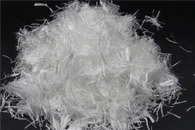




Basalt Fiber is a type of natural volcanic rock fiber that is produced by melting basalt rocks at high temperatures and drawing out the molten material to form fine threads. It is a highly durable and strong material that has become increasingly popular in the construction to reinforce concrete structures, adding strength and durability to the finished product.
The basalt fiber has excellent chemical resistance and alkali resistance. The basalt fiber is a good institution for Polypropylene (PP) fiber and Polyacrylonitrile or (PAN) fiber to reinforce cement concrete. It is also an alternative to Polyester (PE) fiber and Cellulose fiber (Lignin fiber), which can be used to improve the stability of asphalt concrete, such as high temperature stability, low temperature cracking resistance and fatigue resistance.
Product Features & Benefits:
- Excellent strength-to-weight ratio
- Low thermal conductivity
- Non-magnetic and non-conductive
- Easy to process and fabricate
- Environmentally friendly
- High tensile strength: basalt fiber has a tensile strength that is nearly 3 times higher than steel, making it an ideal material for load-bearing structures and reinforcement applications.
- Corrosion resistance: unlike steel, basalt fiber is highly resistant to corrosion and chemical attacks, which makes it suitable for use in harsh and corrosive environments.
- Heat resistance: basalt fiber can withstand high temperatures of up to 750°C, making it ideal for use in high-temperature applications.
- Lightweight: basalt fiber is a lightweight material that can reduce the overall weight of a structure or component by up to 30%, thereby improving fuel efficiency and reducing transportation costs.
- Non-combustible: basalt fiber is a non-combustible material that does not produce any toxic gases or smoke when exposed to fire, making it a safer option for construction and transportation applications.
Technical Data:
|
Material |
Nature Cellulose Fiber |
Type |
Monofilament |
|
Thermal Conductivity |
0.03 W/mK |
Density |
2.60-2.80g/cm³ |
|
Filament Diameter |
13-24μm |
Length |
3-60 mm |
|
Tensile Strength |
≥1200 MPa |
Elastic Modulus |
≥75 GPa |
|
Cracking Elongation |
≤3.1% |
Melting Point |
1450°C |
Application:
- Roads, pavements, bridge, tunnels, highway, wharf, water conservancy and hydropower projects
- Basement floor, side walls, girder large concrete columns of high-rise buildings
- Concrete septic tanks, basement, roof, cistern, parking lot, parking apron, garage floor, national defense facilities
- Thin-wall structure engineering, maintenance and reinforcement projects, geotechnical engineering and protection engineering
- Dense graded asphalt concrete (AC), stone mastic asphalt (SMA), open graded asphalt concrete (OGFC), various asphalt concrete pavements
Storage:
Basalt Fiber should be kept in a dry, cool place to prevent moisture from affecting the fibers. It should also be stored away from sources of heat and direct sunlight.
FAQ
Q: Is basalt fiber expensive compared to other materials?
A: Basalt fiber is relatively affordable compared to other high-performance materials such as carbon fiber and Kevlar, but more expensive than PP fiber, steel fiber and cellulose fiber.
Q: Is basalt fiber easy to work with?
A: Yes, basalt fiber is easy to process and fabricate using standard manufacturing methods such as molding, weaving, and pultrusion.
Q: Is basalt fiber eco-friendly?
A: Yes, basalt fiber is an eco-friendly material that is produced from natural volcanic rocks and does not emit any harmful by-products during production or use.