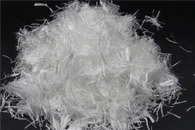




Cellulose Fiber is an organic flocculent fiber material, which can be obtained from the bark, wood, or leaves of plants, or from other plant-based materials by chemical treatment and mechanical processing. The most regular cellulose fiber is wood.
It is widely used in concrete mortar, gypsum products, wood pulp sponge, asphalt road and other fields. It can also be used in manufacturing MDF and home building materials industry. The wood cellulose fiber is easy to disperse in thermal insulation materials to form three-dimensional results, and can absorb 6-8 times of its own weight of water. This kind of structure and characteristics improve the material's workability, operation performance, anti-slide performance, and speed up the construction speed. The dimensional stability and thermal stability of wood cellulose fiber play a very good role in heat preservation and crack resistance of thermal insulation materials. The moisture transfer function of wood fiber makes the hydration reaction between slurry surface and base layer sufficient, so as to improve the surface strength of thermal insulation materials, the bonding strength with base layer and the uniformity of material strength. These properties make wood cellulose fiber an indispensable additive in thermal insulation materials.
Cellulose fibers used in concrete are eco-friendly, biodegradable, recyclable, and widely available throughout the world compared to other fiber types. Moreover, cellulose fibers exhibit interesting physical and mechanical properties, i.e., low density and well-balanced stiffness, toughness, and strength
Product Features & Benefits:
- Made from natural materials, such as wood and paper
- Biodegradable and non-toxic
- Resistant to moisture, rot, and decay
- Lightweight and easy to handle
- Compatible with other concrete additives
- Improves the workability and pumpability of concrete
- Enhances the compressive and flexural strength of concrete
- Reduces the risk of cracking and shrinkage
- Increases resistance to impact and abrasion
- Improves the durability and longevity of concrete structures
Technical Data:
|
Material |
Nature Cellulose Fiber |
Type |
Flake |
|
Cellulose Content |
78% |
Density |
1.0-1.2g/cm³ |
|
PH Value |
7.64 |
Length |
1.8-3.5 mm |
|
Tensile Strength |
600-900 MPa |
Elastic Modulus |
7.8-9 GPa |
|
Water Content |
<4.3% |
Oil Absorption Rate |
>5.5 times |
Application:
- Roads and highways
- Bridges and tunnels
- Buildings and infrastructure
- Pre-cast and decorative concrete
- Flooring and paving
- Landscaping and hardscaping
Storage:
Cellulose fiber should be stored in a dry, cool place, away from direct sunlight and moisture. It is important to follow the manufacturer's guidelines for storage and handling to ensure the product remains effective.
FAQ
Q: How much cellulose fiber should I add to my concrete mix?
A: The amount of fiber needed will depend on the specific application and the desired strength and durability of the concrete. It is best to consult with us or a concrete specialist for guidance.
Q: Is cellulose fiber of concrete safe for the environment?
A: Yes, cellulose fiber is made from natural materials and is biodegradable and non-toxic. It is a sustainable alternative to traditional reinforcing materials and is safe for the environment.
Q: Can cellulose fiber be used in high-traffic areas?
A: Yes, cellulose fiber can improve the abrasion resistance of concrete and is suitable for use in areas with high traffic and heavy use, such as roads and pavements.