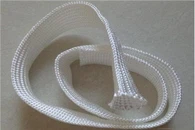





In terms of applications, fiberglass yarns can be categorized into Two types, industrial yarns and electrical yarns.
In terms of sizing, yarns can be categorized into Three types, Y-Yarns, R-Yarns, and S-Yarns.
Y-YARN: starch sizing, easy for heat cleaning, excellent weave property, typically used to produce glass fabrics and general-purpose products. They are also the based materials for Printed Boards.
R-YARN: silane-based sizing,high tensile strength of filaments and great alkali resistance, compatible with EP, UP, VE and PF resin systems.
S-YARN: starch and silane based sizing, outstanding weaving properties and flexible for various industrial applications.
According to manufacturing process, fiberglass yarns are also categorized into another two types: Single Yarn and Plied Yarn.
Hundreds of individual fiberglass filaments are joined to form single yarns by first twisting. Plied yarns are those that have had two or more single yarns twisted together again.
Product Benefits:
1. Consistent linear density
2. Good process-ability and low fuzz
3. Easy for heat-cleaning
4. High tensile strength
Storage:
It is recommended that fiberglass plied yarns is stored in a dry and cool area, out of sunlight, clear of the ground on pallets protected from rainfall. The best temperature range is 15 to 35℃. accordingly, the best humidity is 35% to 65%. Please kindly avoid excessive compaction to protect them from damage. It will be better to remain their original packaging until immediately before us.
FAQ
Q: What is the weight of a bobbin of fiberglass plied yarn?
A: A bobbin of plied yarns normally weigh 4kgs and 8kgs based on our regular packing method.
Q: How many single yarns are joined together to produce plied yarns?
A: 2-6 singles yarns.
Q: What is the HS Code of single yarns?
A: 7019190090.
Q: How many plied yarns can a 20GP container load?
A: Around 10 tons.