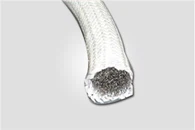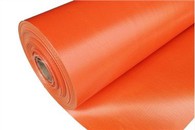



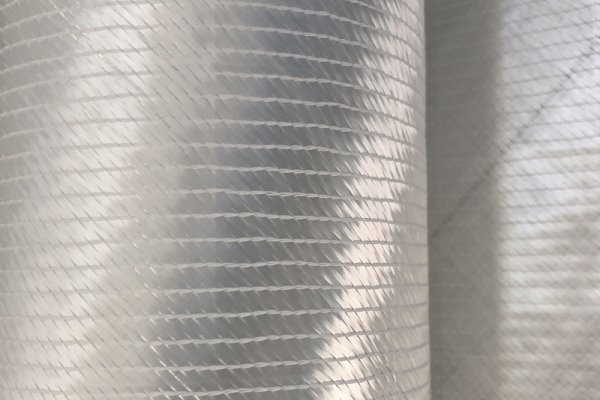
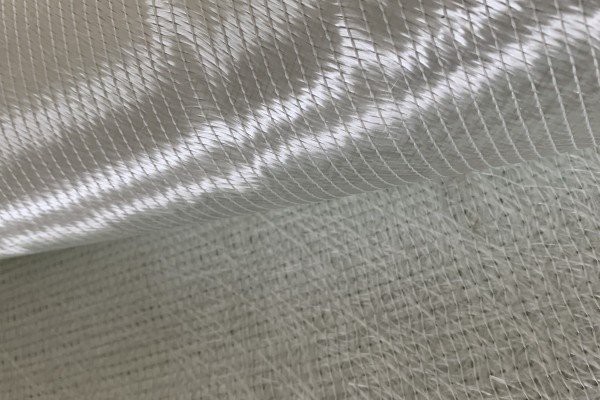


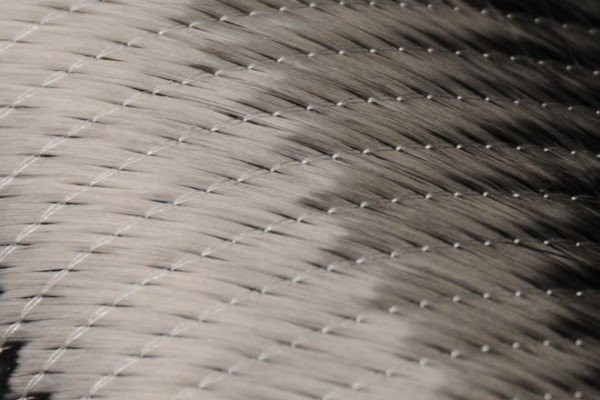

Fiberglass Multiaxial fabrics are non-crimp, multi-axis, and multi-layered reinforcements, made of roving. The Roving placed parallel in each layer in a designed direction could be arranged 2-6 layers, which are stitched together by light polyester threads. The layer count, direction, weight and fiber content of each layer vary based on different production lines and applications. Fabrics can be produced using multiple layers (0°,90 °,+45°,-45°), as well as combined with chopped mat and multiple layers of the veil and/or non-woven materials.
Multiaxial fiberglass fabrics are compatible with epoxy (EP), polyester (UP), and vinyl resin (VE) systems.
It includes Unidirectional fabric, Biaxial fabric, Bi-directional fabric, Triaxial fabric, and Quadraxial fabric.
Unidirectional Fabric:
A unidirectional (UD) fabric is one in which the majority of rovings run in one direction only. A small amount of rovings may run in other directions with the main intention being to hold the primary fibers in position, although the other fibers may also offer some structural properties. Some weavers of 0/90° fabrics term a fabric with only 75% of its weight in warp direction as a unidirectional, whilst for others, the unidirectional designation only applies to those fabrics with more than 90% of the fiber weight in the warp direction. The UD fabrics have high longitudinal strength.
Unidirectional fabric can be made as 0° orientation or 90° orientation.
Double Bias or Bi-Axial fabric:
Double Bias fabrics are continuous roving oriented in the +45° and -45° directions into a single fabric. Double Bias Fabrics offer superior structural performance in applications subject to extreme shear and torsion stress. These properties are ideal for applications such as wind blades, marine panels, and snowboards
Bi-Directional Fabric:
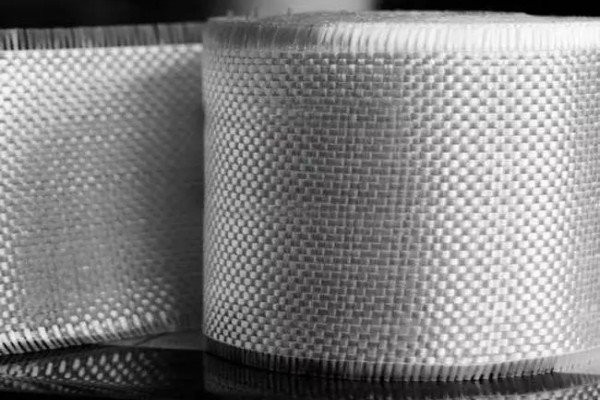
The bidirectional fabric (0° & 90°) made by stitching two layers are different from woven fabric (0° & 90°). The stitched bi-directional fabrics are NON CRIMP FABRICS, which means rovings won't be interlaced as woven fabric. Woven fabric composite tends to fail in high fatigue due to the crimp. This stitched bidirectional fabric avoid the problem and provides excellent fatigue resistance. Another comparison of woven and stitched fabric is that higher GSM woven fabric consumes more resin than stitched fabric due to crimp. This obviously increases the production cost of composite manufacturing.
Triaxial Fabric:
Triaxial fabrics are a three layer construction fabric, there are two styles in Triaxial- one has a fiber orientation of (+45°/90°/-45°) and the other has a fiber orientation of (0°/+45°/-45°). Triaxial fabrics are used for high strength applications.
Quadraxial Fabric:
Quadraxial fabric consists of all layers (0°/+45°/90°/-45°) of roving orientation. This fabric provides strength in all directions. And this fabric can be produced with the maximum aerial density when compared to any other fabric style.
The Matrix of Basic Construction

Identification:
Glass Type | E, ECR, TCR |
Type of Size | Silane |
Area Weight(g/㎡) | 150-2000 |
Width (mm) | 100-3810 |
Product Benefits:
1. Crimp-free construction and outstanding strength
2. Excellent molding property and impregnation
3. Enhanced surface aesthetics of finished products and no print-through
4. Optimized composites directional fiber content
5. Enhanced mechanical properties for lighter laminates
Technical Data:
Product Code | Area Weight of each layer (g/㎡) | Area Weight of Thread (g/㎡) | Total Area Weight (g/㎡) | |||
0° | +45° | 90° | -45° | |||
EBX300 | 150 | 150 | 10 | 310 | ||
EBX400 | 200 | 200 | 10 | 410 | ||
EBX600 | 300 | 300 | 10 | 610 | ||
EBX800 | 400 | 400 | 10 | 810 | ||
ETF480 | 210 | 60 | 210 | 10 | 490 | |
ETW610 | 210 | 200 | 200 | 10 | 620 | |
ETW1170 | 570 | 300 | 300 | 10 | 1180 | |
EQWF810 | 210 | 200 | 200 | 200 | 10 | 820 |
EQWF1200 | 283 | 300 | 317 | 300 | 10 | 1210 |
Area Weight (g/㎡): ±5%; Moisture Content (%):<0.20 | ||||||
Application:
It is mainly applied in vacuum infusion or winding process and mainly used for the manufacture of chemical tanks and pipes, nacelle, wind blades, sport facility, boat parts, automobile and train parts, and so on.
Storage:
Unless otherwise specified, it is recommended to keep fiberglass fabrics in a cool, dry area. Ideal conditions are at a temperature between 15°C and 35°C and a relative humidity between 35% and 65%. The fiberglass multiaxial fabrics must remain in its original packaging material until the point of usage. The packaging is not waterproof. Be sure to protect the product from the weather and other sources of water. When stored properly, there is no known shelf life to the product, but retesting is advised after three years from the initial production date to insure optimum performance.
FAQ
Q: Do all specifications list above?
A: NO, Further weight and weave pattern is available on request.
Q: What application does the multiaxial fabrics use most?
A: As per our simple statistics,it was mostly used in wind energy.
Q: How can I get some samples?
A: Please email us and tell us what samples you want.
Q: Can you export to Russia and accept USD from Russia bank?
A: Yes, we have our way to handle this.