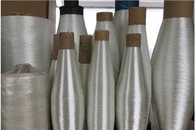





PAN Fiber, also called Polyacrylonitrile Fiber and Acrylic Fiber, is a type of synthetic fiber made from polymerization of acrylonitrile. It is popularly used in many diverse applications owing to its unique features and benefits. PAN fiber is typically produced from a solution of polymer, which is then spun to form fibers of various sizes and lengths.
Acrylic PAN fiber has higher tensile strength, higher initial modulus and stable chemical properties than other fibers. Therefore, the fiber has acid and alkali corrosion resistance, light resistance, weather resistance, and good dispersion, oil absorption. In practical application, the bonding force with concrete matrix is strong, which improves the cohesion and fatigue resistance of concrete, and enhances the impermeability, frost resistance and impact resistance of concrete. Therefore, it is widely used in the engineering of asphalt concrete and cement concrete.
Product Features:
- High tenacity
- Low elongation
- Good resistance to abrasion
- High resistance to chemicals and UV radiation
- Good thermal conductivity
- Low flammability
- High strength-to-weight ratio
- Good dimensional stability
- Excellent resistance to temperature changes
- Offers better insulation and flexibility compared to other fibers
- Easy to care and maintain
- Cost-effective and durable
Technical Data:
|
Material |
100% Acrylic |
Type |
Monofilament |
|
Equivalent Diameter |
11±2μm |
Density |
1.18g/cm³ |
|
Melting Point |
>240℃ |
Ignition point |
556℃ |
|
Acid &Alkali Resistance |
Strong |
Water absorbency |
≤2% |
|
Tensile Strength |
640Mpa MIN |
Elastic Modulus |
10.8GMpa |
|
Crack Elongation |
≥10% |
Length (mm) |
3 |
Application:
- New asphalt concrete pavement surface;
- Old asphalt concrete pavement cover;
- Repair of asphalt concrete pavement;
- Asphalt concrete road cold patch, irrigation joint;
- Rigid frame bridge deck pavement;
- Concrete precast slab, and other cement products;
- Cement concrete pavement, bridge deck, aeroplane, etc.
- Port, deep-water wharf, bypass and severe cold areas;
- Highway anti-collision wall and anti-impact baffle; water storage pool, swimming pool, sewage treatment pool; face-slab dam of water conservancy reservoir project; basement side wall, floor, roof and other structural waterproofing projects.
Storage:
PAN fiber should be stored in a clean, dry and well-ventilated place. The fiber should be kept away from direct sunlight, moisture, and high-temperature environments, as it can change the fiber’s properties.
FAQ
Q: Is pan fiber of concrete suitable for all types of construction projects?
A: Yes, pan fiber of concrete can be used in a wide range of construction projects, including high-rise buildings, bridges, pavements, tunnels and residential properties.
Q: How do I know the right dosage of pan fiber to use in concrete?
A: The recommended dosage of pan fiber varies depending on the type of project and the desired result. A professional concrete contractor will be able to determine the appropriate dosage for your project.
Q: Can pan fiber of concrete be used in cold weather conditions?
A: Yes, pan fiber of concrete is suitable for use in cold weather conditions. It helps to prevent cracking and damage caused by freezing and thawing.
Q: Does pan fiber of concrete improve the appearance of the finished product?
A: Although pan fiber of concrete is primarily used for its strength-enhancing qualities, it can also contribute to the overall appearance of the concrete. The fibers help to create a more uniform texture and reduce the appearance of surface blemishes.
Q: Is pan fiber of concrete environmentally friendly?
A: Yes, pan fiber of concrete is an environmentally friendly option compared to traditional concrete reinforcement methods. The fibers are typically made from recycled materials and require less energy to produce than other reinforcement options.